

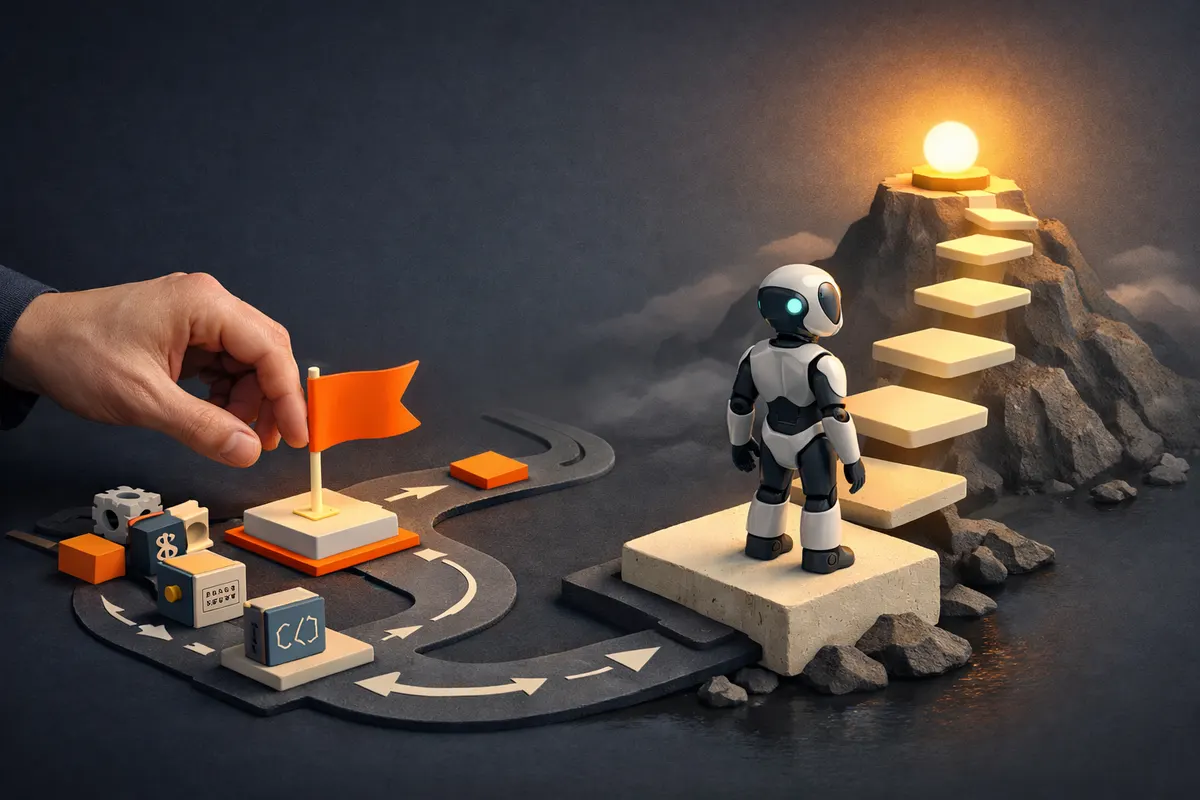
Why modern AI models work better with goals instead of detailed instructions, and how this shifts the human role in working with AI.
Not long ago, I used to spell out every technical detail for the model: which framework to use, how to structure the layout, what to optimize. I was essentially doing the work for it and playing the role of an entire dev team, because I was still operating on old habits, the same instincts I had running my own IT company back in 2014.
From Instructions to Goals
Then I tried something different. Instead of giving instructions, I gave a goal:
- "The page needs to load in under one second."
- "Come up with five concepts."
- "Don't publish until these criteria are met."
The model chose its own stack, structure, and tools, and then explained what it did and why.
It turns out that the more advanced a model becomes, the less it needs to be walked through every step. If you can clearly articulate a goal, the model will find its own way to the solution, often a better one than you would have designed yourself.
This changed my own role in the process. I stopped being a task-setter and became a goal-setter.
Formulate the goal. The model will figure out the rest better than you could.
The Takeaway
As models grow more capable, the bottleneck is no longer technical execution, it's clarity of intent. The skill worth developing now isn't writing more detailed instructions, it's learning to define outcomes precisely: what does "done" look like, what constraints matter, and what quality bar has to be met before something ships.
That shift also changes what oversight looks like. Instead of reviewing how a task was carried out step by step, the real work becomes deciding where a model can be trusted to make its own calls, and where a human still needs to set the boundaries. Getting that balance right is quickly becoming one of the more valuable skills in working with AI.