

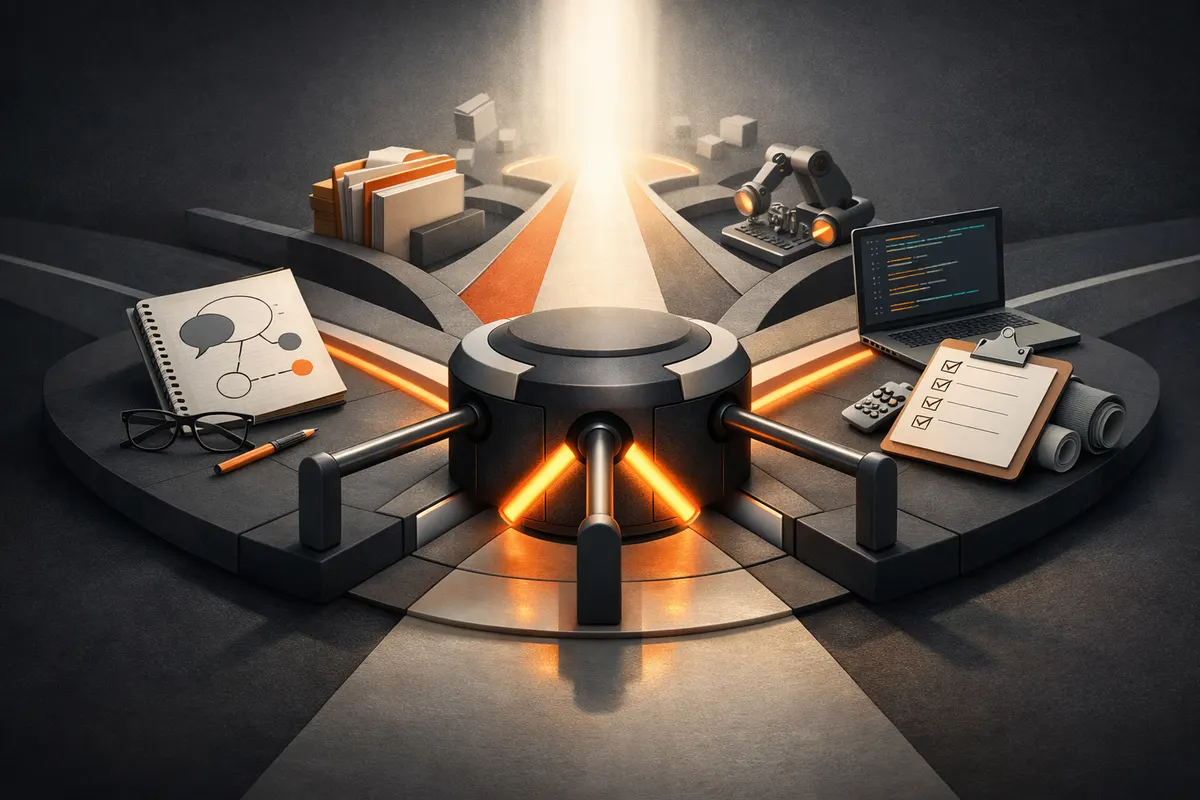
OpenAI is preparing to merge Chat, Work, and Codex into a single unified environment. The team has already confirmed this direction and is working on making the chat experience smoother as part of the transition.
Right now, each tool serves a distinct purpose: Chat handles questions and open-ended discussion, Work carries out multi-step tasks, and Codex focuses on code and repositories. The logic behind bringing them together is straightforward -- combine the ease of a normal conversation with the capabilities of an agent that can actually get work done.
The Real Question Is Usage Limits
For me, the biggest open question is how usage limits will work after the merge. Currently, regular chat and Work/Codex activity are tracked separately. It matters a lot that after unification, simply talking through an idea doesn't start eating into the quota reserved for actual task execution.
How this will be structured post-transition isn't clear yet. Hopefully OpenAI preserves the ability to think out loud and discuss freely, without having to ration every message.
Why This Matters for Users
The push to unify these modes reflects a broader frustration: switching between different interfaces for thinking versus doing adds friction that slows people down. If OpenAI gets the balance right, users could move seamlessly from brainstorming an idea to having it executed, without re-platforming or worrying about which mode they're burning quota on.
For teams and individuals who rely on these tools daily, understanding how the modes work -- and how quota is consumed -- will be essential once the transition rolls out. Until OpenAI shares more details, it's worth keeping an eye on official guidance before planning workflows around the merged environment.