

An AI chatbot can answer routine questions outside office hours and collect useful context before a person joins the conversation. It can also invent an answer, frustrate a customer or expose information if it is given too much authority. The difference is primarily system design.
Good chatbot tasks
Start with questions whose answers already exist in approved material: services, opening hours, delivery areas, appointment preparation and basic policies. The assistant can guide visitors to the right page, collect contact details and summarise the conversation for staff.
Tasks that need a person
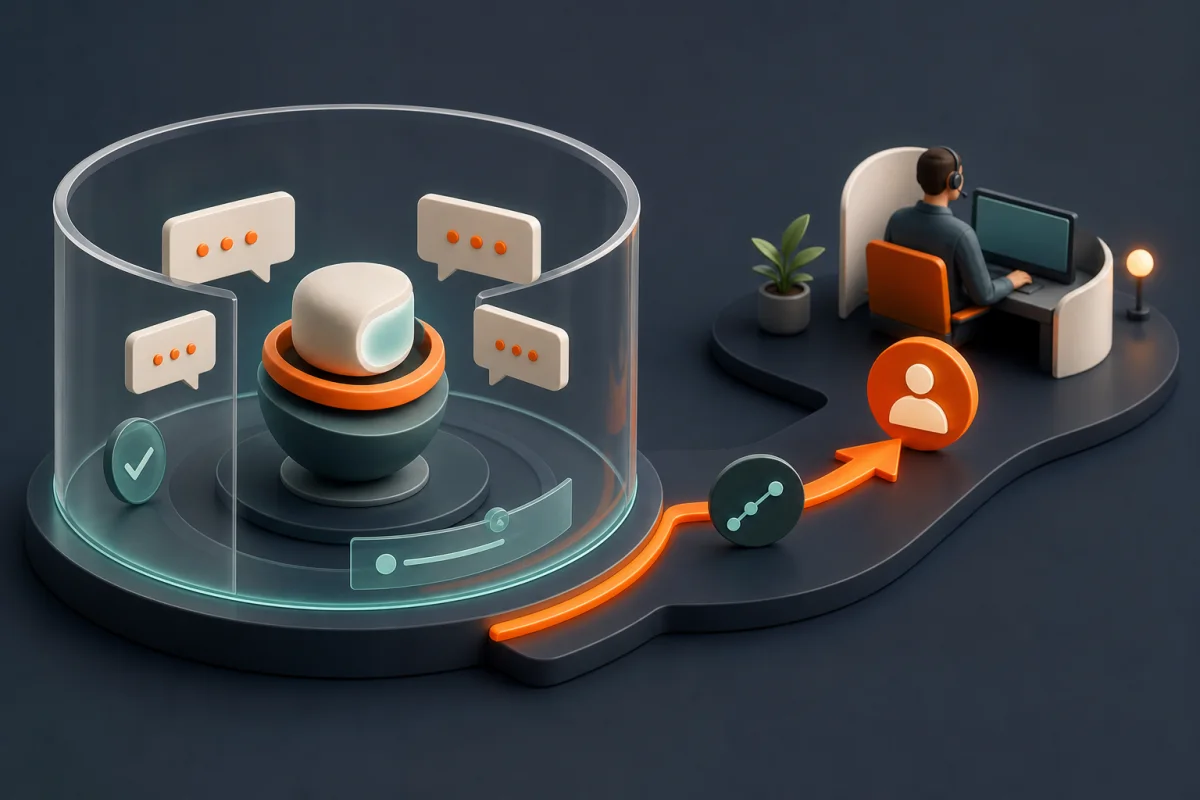
Complaints, refunds, contractual promises and unusual pricing should escalate. The customer should always know when they are interacting with automation and how to reach a human. Hiding the escalation route may reduce apparent ticket volume while damaging trust.
Knowledge and retrieval
Do not expect a general model to know the business. Build a controlled knowledge source with ownership and review dates. Retrieve only the relevant approved sections for each answer and instruct the assistant to acknowledge when the source does not contain an answer.
Data protection
Collect the minimum personal information necessary. Explain the purpose and retention in the privacy notice. Review provider terms, access controls and whether conversations are used for model training. Sensitive details should not be requested merely because the interface makes it easy.
Measure service, not conversation count
Track resolved questions, qualified leads, escalation rate, unanswered topics and customer feedback. Review transcripts for failure patterns and improve the knowledge base. A low escalation rate is not automatically success if the chatbot is confidently giving poor answers.
The safest first chatbot is narrow, transparent and easy to escape. Expand its role only after the business has evidence that customers are receiving accurate help.