

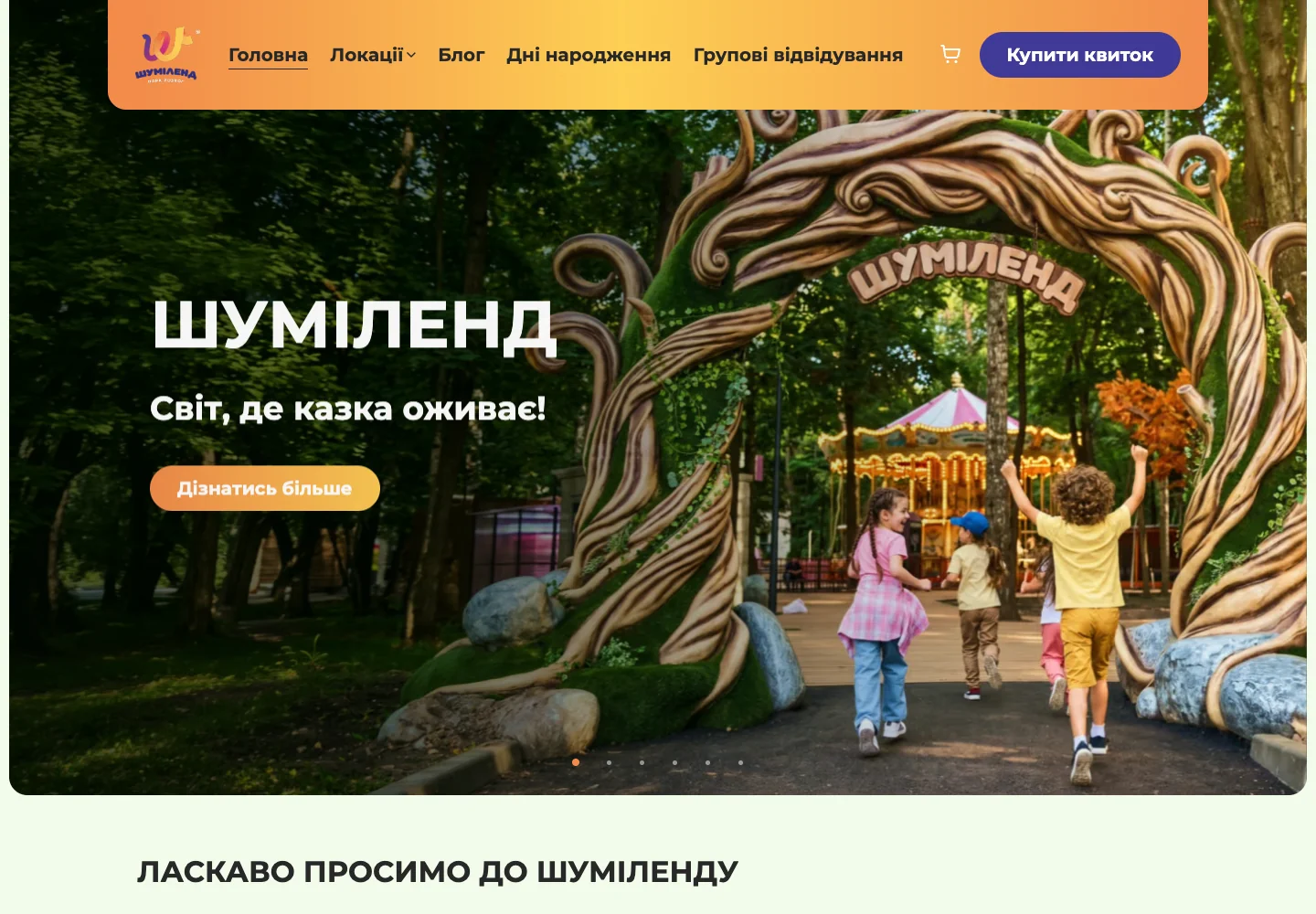
A family attraction website has to balance inspiration with practical information. Families want to see what is there, understand ticket options and plan a visit. The team behind the park needs to update content, respond to enquiries and understand the activity generated by its marketing.
AImpress built the digital platform for Shumiland, a family entertainment park in Kyiv, Ukraine. The work connects the public website with content management, ticketing and business integrations. CRM, analytics and dashboards extend the platform into the team's day-to-day operations.
The project shows how an attraction website can support the whole visitor journey, from discovering a location to choosing tickets or enquiring about a group visit.
One park, several visitor journeys
Shumiland offers different locations and activities, alongside birthday celebrations and group visits. These visitors do not all need the same information or the same next step.
The public site separates locations, ticket information, news, birthdays and group visits. Photography and visual storytelling introduce the experience, while dedicated pages provide the practical details. A family planning a day out can explore the park; a group organiser can find a more specific enquiry route.
That structure is useful beyond navigation. It gives the marketing team distinct destinations for campaigns and helps keep content relevant to the visitor's purpose.
The technology foundation
The application uses Next.js, React and TypeScript, with Payload CMS and PostgreSQL. The public interface and the content tools share a structured model of the park's information.
Next.js and React support the page experience and reusable interface components. Payload provides the CMS, including collections and publishing tools. PostgreSQL stores the underlying records. API integrations connect the application with external services that own specialised parts of the process.
The value of this combination is practical: the website can present a consistent experience while the content, visitor enquiries and external systems continue to evolve.
Content the park team can maintain
The CMS supports park content such as pages, locations, articles, reviews and media. Reusable content blocks allow the team to assemble sections including galleries, pricing, lead forms, calls to action and news.
For an attraction, this matters because information changes. Seasonal events, holiday programmes and ticket presentation need updates more frequently than the overall website design. A structured content model gives those changes a defined place instead of requiring a new page implementation each time.
Draft and published states support preparing changes before they become public. Image descriptions and SEO fields sit alongside the content they describe, helping editors maintain the information as part of normal publishing.
Ticketing with a clear source of truth
The ticketing integration connects the website with the external system that supplies ticket tariffs and the payment journey. The website handles the visitor-facing presentation while the ticketing service remains responsible for its authoritative ticket and payment information.
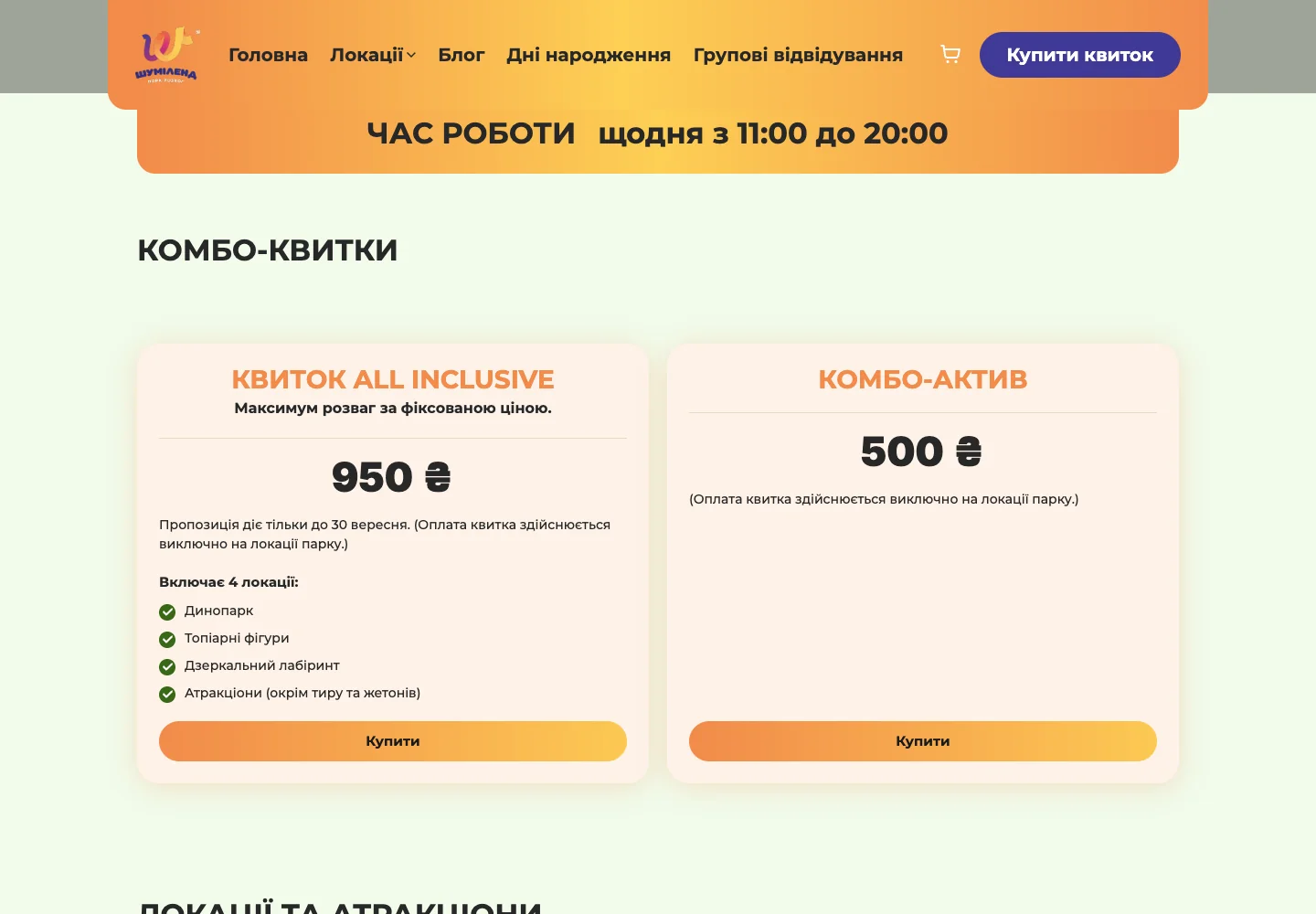
This separation avoids asking staff to maintain competing versions of prices in different places. The site can organise options in a way visitors understand, while retrieving or synchronising the data controlled by the ticketing provider.
The distinction between starting checkout and completing payment is equally important. Redirecting a visitor to a payment page does not confirm that payment succeeded. Business reporting and customer messages need to reflect the status supplied by the responsible system.
Enquiries and business integrations
Birthday and group enquiries carry more context than a general contact request. A date, group size and the type of visit can affect how the team responds. Capturing that information in structured fields makes it more useful for follow-up.
The platform combines lead capture with notifications and telephony integration. CRM connections provide a business context for relationship management, while analytics and dashboards provide a view of activity across the wider solution.
The objective is to keep the visitor's intent understandable as it moves between systems. A group enquiry, a callback request and a ticket order are different records with different next actions. Integration should preserve those differences.
Analytics and dashboards beyond page views
Traffic is only one part of an attraction's digital activity. The team also needs to understand how people explore locations, approach ticketing and start an enquiry. CRM information and operational data can add context that a website visit alone cannot provide.
Analytics and dashboards are included in the wider project. Their purpose is to help the business see relevant activity and make decisions. For an attraction using this approach, a useful measurement plan separates content engagement, enquiries, checkout initiation and confirmed business outcomes.
Each measure needs a definition and an authoritative source. Campaign information can be associated with enquiries where available, while payment status should come from the payment or ticketing system. This keeps marketing reports from treating an intermediate click as a completed sale.
Integration technology that can adapt
The principles are transferable to other parks, museums and visitor attractions. A CMS manages content. APIs exchange data with business systems. Webhooks report events. Analytics records selected interactions, and dashboards combine the information the team needs to review.
The exact products depend on the organisation. AImpress can connect different ticketing, CRM, communication and reporting tools through the interfaces they make available. An integration assessment establishes the data ownership, permissions and delivery behaviour before implementation begins.
Read what a modern website for a family attraction needs for a practical checklist covering these decisions.
What the project delivers
Shumiland has a live visitor platform with dedicated content, ticketing and enquiry journeys, backed by a CMS and connected business capabilities. The result is a foundation for both the public experience and the team's operational work.
This foundation allows future campaigns, content and integrations to build on the same visitor journeys. Reporting can then help the team prioritise what to improve next.
Explore the live Shumiland website, view our client projects, or read about website development and system integration.
Planning a connected website for an attraction? Discuss your project. Tell us about your visitor journeys, existing ticketing tools and the information your team needs to manage.