

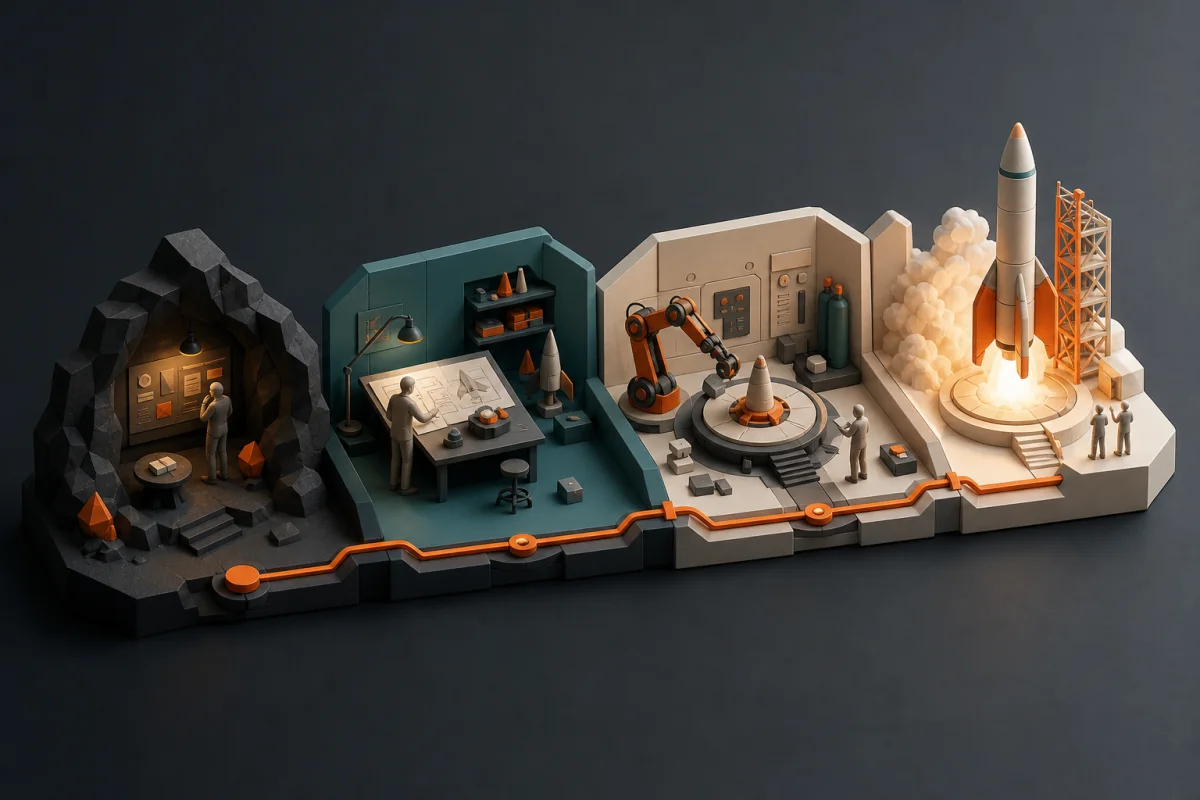
A simple automation can be demonstrated in an afternoon. That does not mean it is ready to handle customer data on Monday. Production time includes understanding the process, obtaining access, testing exceptions and deciding what happens when an external service fails.
Discovery
The first stage maps the current process and establishes the desired outcome. A focused workflow may need only a few meetings if the rules and systems are clear. Discovery takes longer when departments disagree about the current process or important exceptions exist only in people's memories.
Useful outputs include a process map, system inventory, data classification, baseline measure and acceptance criteria. Skipping these artefacts usually moves the same questions into the build phase, where they are more expensive.
Prototype and integration
A prototype proves that the principal systems can communicate and that the AI task is feasible. It should use representative data, not only ideal examples. Integration time varies widely depending on API quality, permissions and whether a test environment exists.
Production hardening
This stage separates a demonstration from an operational workflow. It includes validation, retries, duplicate prevention, access controls, logging, alerts and human escalation. The team tests malformed inputs, unavailable suppliers and partial success.
Pilot and rollout
Run the workflow with a limited volume or a single team. Compare its output with the existing process and record exceptions. Staff need instructions for approval, correction and incident reporting. Expansion follows evidence from the pilot.
A realistic way to plan
Treat the project as a series of decisions rather than one fixed coding estimate. A narrow workflow with standard integrations can often reach a controlled pilot in weeks. A multi-system process involving sensitive data, legacy software or autonomous decisions will require longer.
The fastest route is not to compress testing. It is to reduce scope. Automate one valuable path, retain a manual fallback and postpone optional features. A smaller production workflow creates more business value than an ambitious prototype that nobody trusts.